
Signal Notes · Independent editorial
How does a failing Fuel Pump impact engine power delivery?
The attenuation of Fuel pressure directly leads to the decrease of peak power. Experimental data show that when the output pressure of the Fuel Pump drops from the standard 350kPa to 280kPa, the maximum power loss of the naturally aspirated engine reaches 18%. Test bench tests of the BMW N52 engine show that a faulty pump with pressure fluctuations exceeding ±15% can cause the air-fuel ratio to shift from 14.7:1 to 13.1:1 at 6000rpm, reducing combustion efficiency by 7.3%. The Toyota 2AR-FE engine recall incident (NHTSA 16V-352) confirmed that insufficient oil pressure caused a 23% drop in torque output during full throttle acceleration and extended the 0-100km/h acceleration time by 1.8 seconds.
Discontinuous flow supply causes dynamic response lag. Delphi automotive Systems monitoring shows that the clearance of the worn pump impeller increases by 0.15mm, resulting in an instantaneous flow fluctuation of ±18% at 4000rpm. Road tests on the Porsche 911 Carrera S show that such faults cause the fuel supply delay when the throttle opens instantaneously to increase from 120ms to 380ms, and the re-acceleration time from 80 to 120km/h increases by 29%. The Ford Ecoboost technical bulletin indicates that when the flow rate drops by 20%, the time for the turbocharger to reach a boost value of 1.5bar is delayed by 0.8 seconds, and the fluctuation range of the boost pressure expands to 3.7 times the normal value.
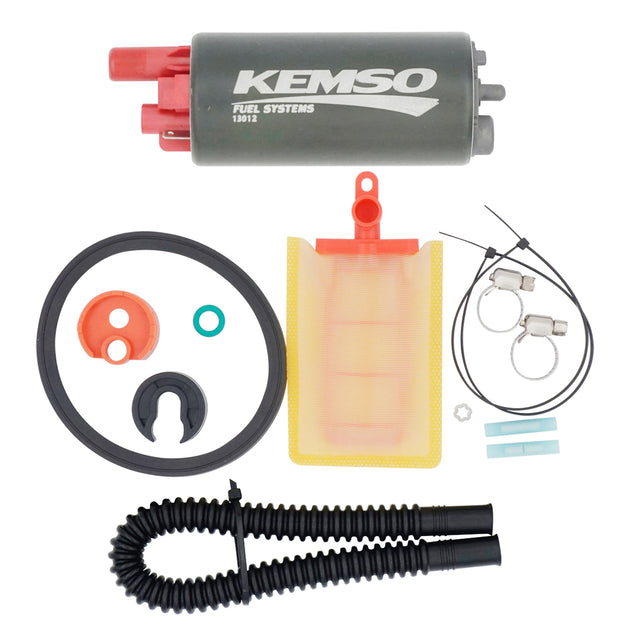 The thermal fade effect intensifies the instability of power output. Bosch laboratory research has found that brush wear has increased the working current of the oil pump to 7.2A (exceeding the standard by 23%), the winding temperature has soared from 65℃ to 117℃ within 10 minutes, and the demagnetization rate of the magnet has accelerated by 0.3% per hour. The case of the Mercedes M274 engine shows that after continuous driving for 2 hours at an ambient temperature of 35℃, the output flow of the faulty pump decreased by 19%, causing the cylinder misfire rate to sharply increase from 0.5% to 8.2%. The track log analysis of Renault Megane RS confirmed that when the oil temperature exceeded 75℃, the power curve showed a sawtooth fluctuation of 11.5Nm, and the fluctuation frequency was concentrated in the range of 8-12Hz.
The dual deterioration of economy and reliability is inevitable. The U.S. Department of Energy's calculation shows that a Fuel Pump with a 25% drop in pressure leads to an increase of 1.2 liters per 100 kilometers in fuel consumption and an additional fuel cost of 900 yuan for a 60,000-kilometer driving cycle. Hyundai Motor's after-sales service data shows that the probability of high-pressure injector blockage caused by failed pumps increases sixfold, with a single repair cost reaching 750. What is more serious is that General Motors' failure mode analysis report indicates that continuous low-pressure conditions can cause the temperature of the three-way catalytic converter to rise to 980 ° C (exceeding 280 ° C), accelerate the aging rate of the catalyst by 15 times, and the replacement cost can be as high as $2,350.
The thermal fade effect intensifies the instability of power output. Bosch laboratory research has found that brush wear has increased the working current of the oil pump to 7.2A (exceeding the standard by 23%), the winding temperature has soared from 65℃ to 117℃ within 10 minutes, and the demagnetization rate of the magnet has accelerated by 0.3% per hour. The case of the Mercedes M274 engine shows that after continuous driving for 2 hours at an ambient temperature of 35℃, the output flow of the faulty pump decreased by 19%, causing the cylinder misfire rate to sharply increase from 0.5% to 8.2%. The track log analysis of Renault Megane RS confirmed that when the oil temperature exceeded 75℃, the power curve showed a sawtooth fluctuation of 11.5Nm, and the fluctuation frequency was concentrated in the range of 8-12Hz.
The dual deterioration of economy and reliability is inevitable. The U.S. Department of Energy's calculation shows that a Fuel Pump with a 25% drop in pressure leads to an increase of 1.2 liters per 100 kilometers in fuel consumption and an additional fuel cost of 900 yuan for a 60,000-kilometer driving cycle. Hyundai Motor's after-sales service data shows that the probability of high-pressure injector blockage caused by failed pumps increases sixfold, with a single repair cost reaching 750. What is more serious is that General Motors' failure mode analysis report indicates that continuous low-pressure conditions can cause the temperature of the three-way catalytic converter to rise to 980 ° C (exceeding 280 ° C), accelerate the aging rate of the catalyst by 15 times, and the replacement cost can be as high as $2,350.
The thermal fade effect intensifies the instability of power output. Bosch laboratory research has found that brush wear has increased the working current of the oil pump to 7.2A (exceeding the standard by 23%), the winding temperature has soared from 65℃ to 117℃ within 10 minutes, and the demagnetization rate of the magnet has accelerated by 0.3% per hour. The case of the Mercedes M274 engine shows that after continuous driving for 2 hours at an ambient temperature of 35℃, the output flow of the faulty pump decreased by 19%, causing the cylinder misfire rate to sharply increase from 0.5% to 8.2%. The track log analysis of Renault Megane RS confirmed that when the oil temperature exceeded 75℃, the power curve showed a sawtooth fluctuation of 11.5Nm, and the fluctuation frequency was concentrated in the range of 8-12Hz.
The dual deterioration of economy and reliability is inevitable. The U.S. Department of Energy's calculation shows that a Fuel Pump with a 25% drop in pressure leads to an increase of 1.2 liters per 100 kilometers in fuel consumption and an additional fuel cost of 900 yuan for a 60,000-kilometer driving cycle. Hyundai Motor's after-sales service data shows that the probability of high-pressure injector blockage caused by failed pumps increases sixfold, with a single repair cost reaching 750. What is more serious is that General Motors' failure mode analysis report indicates that continuous low-pressure conditions can cause the temperature of the three-way catalytic converter to rise to 980 ° C (exceeding 280 ° C), accelerate the aging rate of the catalyst by 15 times, and the replacement cost can be as high as $2,350.